
Air Conditioned Shuttle Service for Port Canaveral Cruise Parking
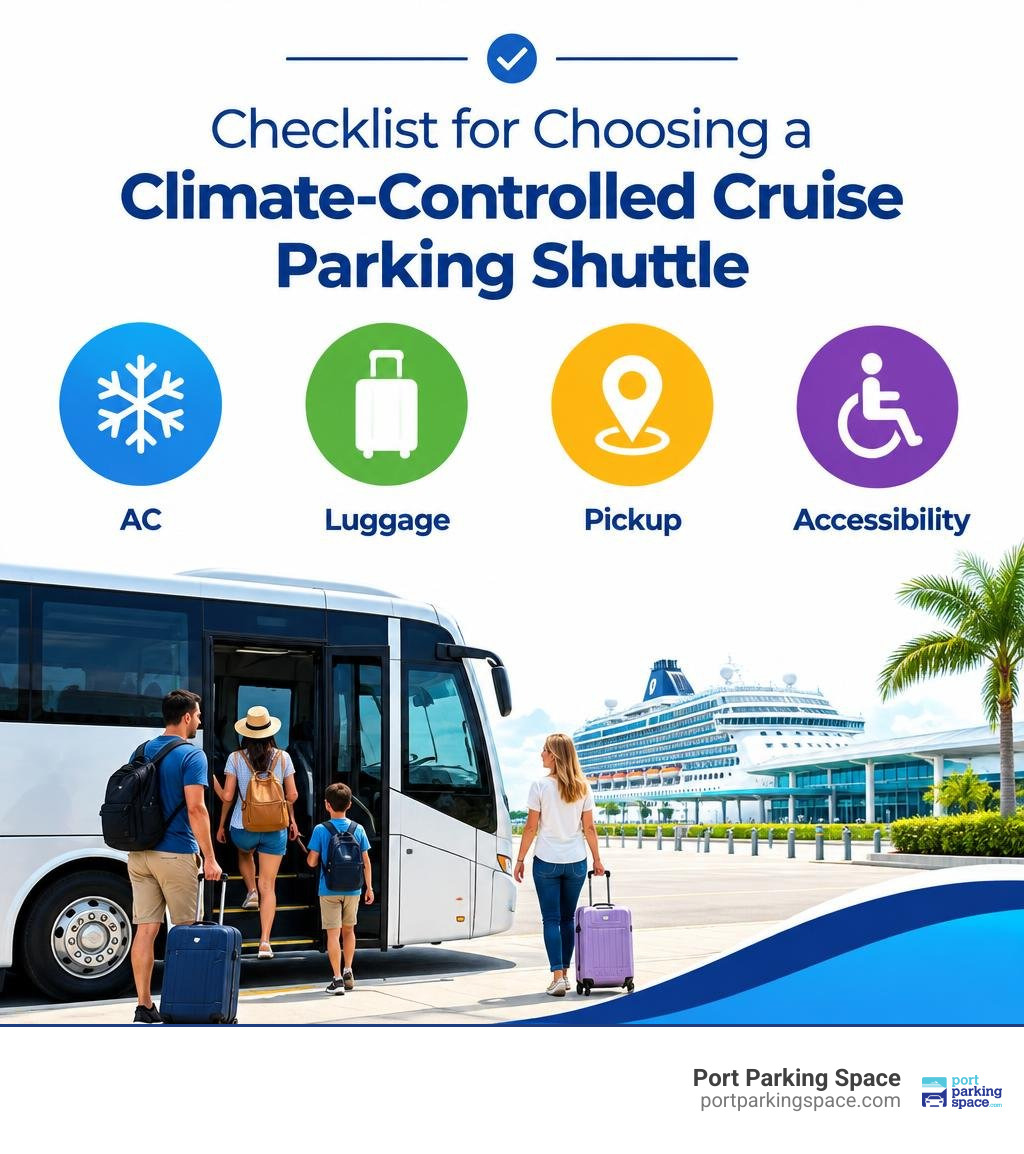
Before booking cruise parking, confirm that the terminal shuttle is air-conditioned, has room for your luggage, and serves your cruise terminal. Ask where to board, how pickup works, and whether the operator can accommodate strollers or mobility devices. Those details matter when you are moving bags through Florida heat.
Distance matters, too. Selecting a lot close to the terminals can mean a shorter shuttle ride, though you should still check the pickup process before you reserve.
As an offsite Port Canaveral cruise parking operator, we observe firsthand how embarkation-day travel logistics shape the practical questions in this guide to selecting an air conditioned shuttle service.
Helpful transfer resources:
Why Choosing an Air Conditioned Shuttle Service Matters for Cruise Travel
Embarkation day involves tight schedules, multiple pieces of luggage, and shifting logistics. When traveling through Central Florida corridors such as Orlando, Cocoa Beach, and Cape Canaveral, weather conditions introduce a major comfort challenge. Transitioning from your personal vehicle to an offsite lot and onto a terminal transfer requires continuous climate control to mitigate fatigue and keep your travel party refreshed.
High humidity levels and intense coastal sunshine can quickly elevate body temperatures, turning simple tasks like loading luggage into exhausting chores. Reliable air conditioning on your transfer vehicle bridges the gap between your car and the cruise ship terminal. Port Canaveral’s official guest transportation resources highlight the wide variety of ground transit available, but confirming the climate-control quality of your selected provider remains essential for personal comfort and peace of mind.
Florida Heat and Embarkation Day Climate Control
Midday temperatures in Brevard County routinely create heavy thermal loads on vehicles and passengers alike. Loading heavy suitcases, corralling family members, and checking reservation documents under the midday sun can leave everyone drained before boarding even begins. Entering an actively cooled vehicle creates immediate relief, allowing passengers to reset their core temperature during the transit segment.
Proper climate control also protects sensitive travel items, including medications, baby supplies, and delicate electronics from extreme cabin heat. A shaded loading area combined with a pre-cooled cabin can make a noticeable difference in how your group feels once the shuttle pulls away from the lot. Utilizing practical stress-free departure shuttle secrets allows you to coordinate luggage loading smoothly while stepping right into an interior that has already been cooled.
Enhancing Comfort for Cruise Groups
Cruise vacations regularly bring together multi-generational groups, from toddlers in strollers to grandparents with mobility limitations. Vulnerable family members are particularly sensitive to rapid temperature shifts and heat exhaustion. A comfortable, climate-controlled cabin keeps infants calm and offers older adults a restful environment while moving between parking areas and terminal gates.
We have found that families traveling with young children or older relatives tend to appreciate shuttles that minimize time spent waiting outdoors in direct sun. Coordinating a large group is simpler when the ground transport experience is organized and cool. Following tested Port Canaveral shuttle pickup tips ensures your entire party remains together, minimizing outdoor waiting periods and maximizing cabin comfort.
Planning a Cruise Parking Shuttle Transfer

Transfer logistics depend on clear communication between travelers and their parking provider. When planning your embarkation morning, you should account for check-in time slots, terminal traffic patterns, and vehicle loading procedures. Arriving at the lot with a clear understanding of the transfer sequence ensures your party avoids unnecessary delays.
To ensure an orderly departure, verify the following details with your transportation provider:
- Exact boarding locations and check-in procedures upon lot arrival
- Estimated departure frequency throughout the embarkation window
- Dedicated luggage assistance and storage capabilities
- Direct terminal drop-off zones versus shared multi-stop routes
- Return pickup instructions for disembarkation morning
Shuttle Transfer Planning for Cruise Parking
Budgeting your time correctly helps you avoid the rush at port security. Official on-site parking operated by the Port Authority charges $20.00 per day plus tax, leading many passengers to select offsite parking options that are typically more affordable while including passenger transfers.
When evaluating offsite lots, pay close attention to operational structure. Booking directly with the parking operator gives you direct communication about vehicle schedules, driver assistance, and terminal routes. This distinction matters most on embarkation morning, when any confusion about pickup points or shuttle timing can add stress to an otherwise simple process. You can review and compare cruise terminal shuttle service packages to see how specific amenities align with your boarding schedule.
Proximity and Transit Times to Port Canaveral Terminals
The physical distance between your parking lot and the ship’s berth directly impacts your total travel time and vulnerability to local traffic delays along George King Boulevard or SR 528. Offsite parking facilities around Port Canaveral generally fall into three geographic tiers:
- Under 1 mile (closest): Port Parking Space (0.5 miles)
- 1–3 miles (nearby): Other offsite facilities (1.6 miles)
- 3–7 miles (further): Additional offsite facilities (3.6 miles, 6.3 miles, and 6.8 miles)
When identifying the closest off-site location, Port Parking Space provides a shorter shuttle ride, bypassing long highway stretches and creating predictable arrival windows. A shorter ride also means less time for a cooled cabin to lose its chill before you reach the terminal doors, which can matter on especially warm mornings. Consulting a detailed distance and shuttle guide will help you calculate realistic transit durations based on where your vehicle is parked.
What to Consider When Choosing a Port Transfer
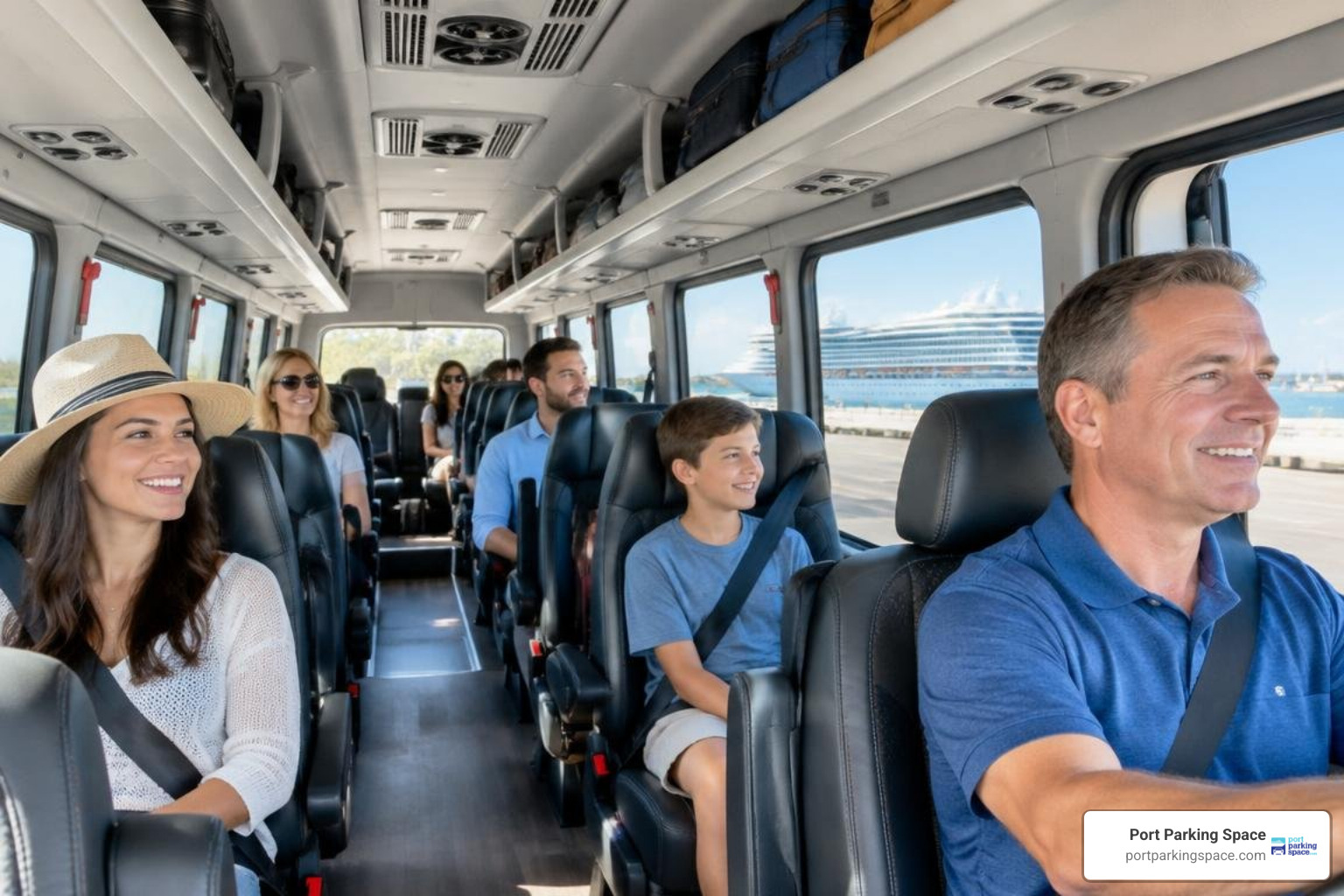
A quality transfer balances cabin comfort, spacious seating, and secure baggage handling. Before committing to a reservation, consider these practical questions:
- Is the shuttle vehicle fully climate-controlled with active rear air conditioning vents?
- Does the operator provide dedicated compartments for oversized suitcases and cruise bags?
- Are passenger pickup zones covered or shaded from direct sun and rain?
- How are return transfers handled when multiple ships disembark simultaneously?
Features to Ask About in an Air Conditioned Shuttle Service
Not all commercial vehicle cooling systems perform identically under heavy coastal humidity. Large passenger vans and buses require robust, commercial-grade climate control systems that distribute air evenly across every row, rather than just cooling the driver’s cabin.
When selecting shuttle serviced cruise parking lots, inquire about interior configurations. Forward-facing seating, dedicated overhead air vents, and enclosed baggage sections behind or beneath the passenger cabin create a much more comfortable environment than crowded interiors where suitcases are stacked in the aisle. Inquiring about these specifics ensures your party enjoys continuous airflow and ample personal space throughout the drive.
Accessibility and Passenger Needs
Travelers with specialized physical requirements should always confirm vehicle accommodations ahead of embarkation day:
- Availability of ADA-compliant wheelchair lifts or low-floor ramp boarding
- Securement systems for mobility scooters and motorized chairs
- Storage policies for folding rollators, walkers, and standard wheelchairs
- Accommodation for certified service animals accompanying passengers
Communicating mobility needs during booking guarantees that the transport team assigns the appropriate vehicle to your arrival window without creating unnecessary delays.
Frequently Asked Questions About Cruise Terminal Shuttles
How frequently do terminal shuttles operate on embarkation days?
Most dedicated port transit operators run continuous loops during peak morning and early afternoon embarkation hours. Departure intervals typically range from continuous boarding cycles to scheduled dispatches designed around passenger arrival flows. Referencing a comprehensive Port Canaveral park and shuttle guide will help you match your lot arrival time with your assigned terminal check-in window.
What luggage accommodations and assistance should I confirm?
Standard cruise baggage allowances usually permit two large checked bags and one carry-on item per traveler. Commercial shuttles feature rear cargo holds or lower-level luggage bays to keep the main aisle clear. Drivers generally assist with lifting bags into and out of storage bays, placing them directly at the terminal porter drop-off stations upon arrival.
What should families confirm about child seats and accessibility?
Regulations regarding car seats on commercial transport vary depending on vehicle weight classifications and municipal transit rules. Large commercial buses often exempt child seat requirements, whereas standard passenger vans may require parents to provide compatible restraints. Families traveling with infants or strollers should reach out to the provider in advance to verify whether prams must be collapsed for transit and how specialized seating requests are handled.
Conclusion
A well-organized, climate-controlled transfer sets a relaxed tone for your entire cruise vacation. By confirming air conditioning standards, direct terminal routing, and luggage capabilities in advance, you eliminate unnecessary friction on embarkation morning.
Selecting an offsite lot located less than half a mile from the terminals ensures an efficient transfer process backed by a consistent 5.0-star Google rating across more than 11,000 reviews. When you are ready to finalize your travel logistics, you can reserve your Port Canaveral cruise parking and look forward to a smooth, comfortable start to your voyage.